Colorimetry: Summer and Substations
- Oct 30, 2024
- 1 min read
In the Northern Hemisphere, the summer season begins around June 20 or 21, marking the summer solstice.
In the Southern Hemisphere, the summer season begins around December 21 or 22, also marking the summer solstice.

With the arrival of summer, nature transforms into a spectacle of vibrant and refreshing tones, revealing vitality and energy, but also freedom. These bright and cool tones influence the world of fashion.
It is crucial to choose the colors that will adorn our clothing with caution. The summer color palette includes shades such as turquoise, coral, lemon yellow, and pastel pink, among others.
These fresh and cheerful tones are ideal companions to highlight the beauty of warm-toned individuals. For those with cool-toned complexions, lavender and mint tones can become reliable allies. Key garments such as lightweight dresses, sandals, and hats add a dose of freshness and lightness.
Colorimetry requires subtle discernment and understanding of how it will influence one's perception.
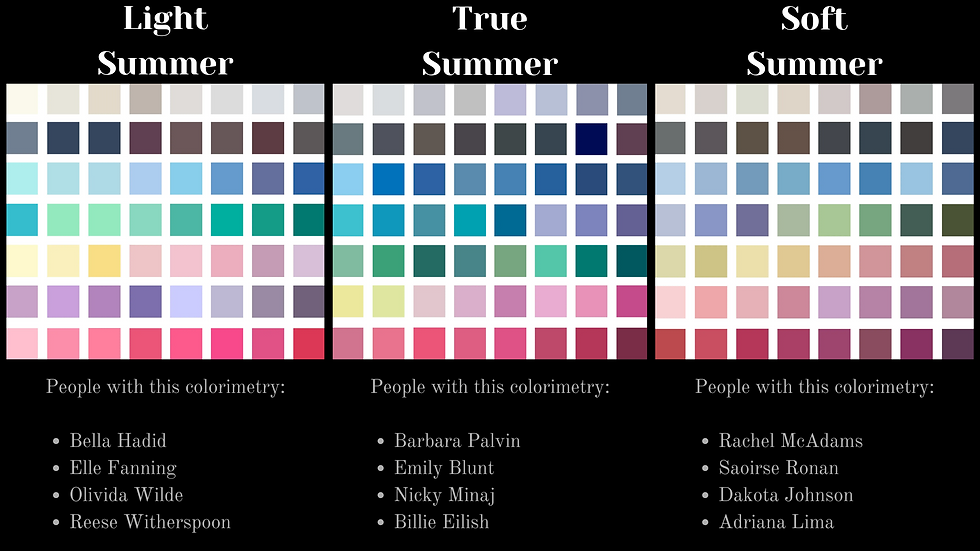

The simplest way to determine your colorimetry is as follows:
Take a selfie with a clean face in natural light (perhaps in front of a window).
Upload the image to Canva and use the eyedropper tool to select the colors of your hair, eyes, lips, and skin.
Copy the color code for each.
Go to ChatGPT and ask for the exact colorimetry with substations for those color codes.
Prompt Ex: ''Considering the following color codes: Hair: #25100A, Eyes: #664731, Lips: #F1AAA6, and Skin: #F6D6C7, what would be the appropriate colorimetry with substations for these features?''



Comments